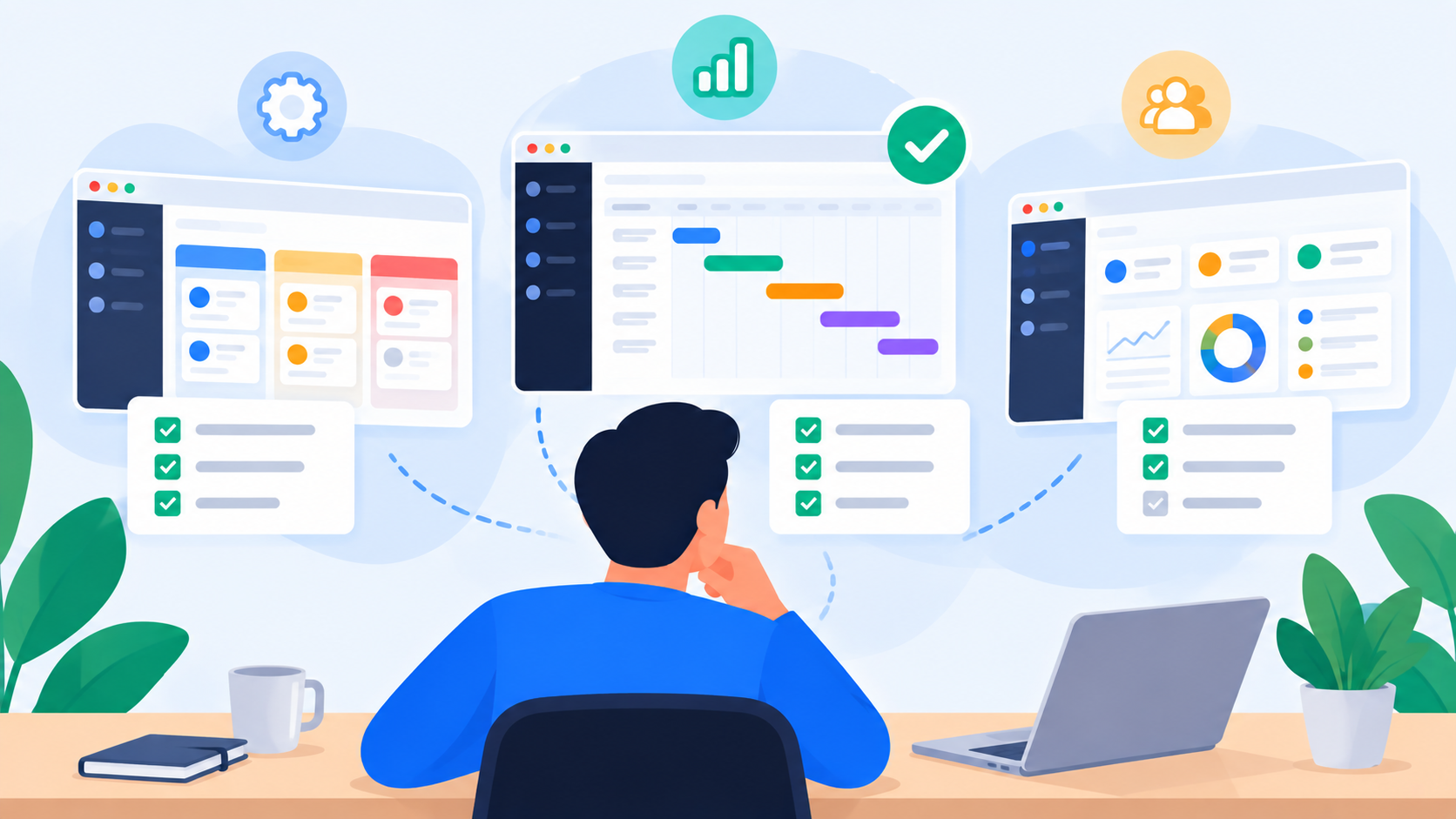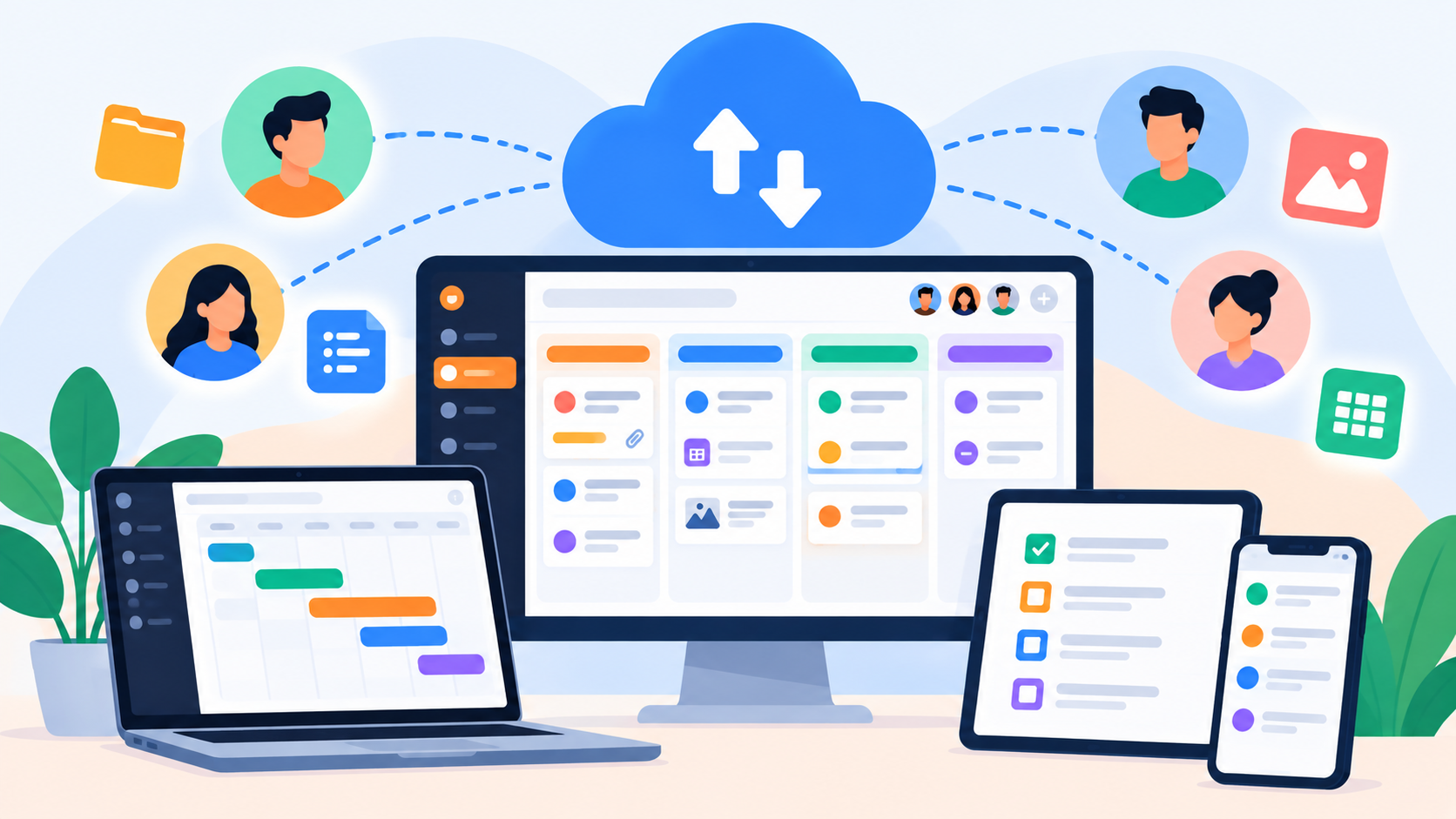
The Complete Guide to Task Trackers, Task Boards, and Smart Work Management


Project management is more than tracking tasks. Learn how task managers, task boards, workload tracking and smart project tools help individuals and teams stay organized.
Managing projects sounds simple until the number of tasks, deadlines, people, files, and priorities starts growing.
A small project might begin with a simple to-do list. A larger project quickly needs task management software, project tracking, task boards, deadlines, ownership, workload visibility, and a reliable way to understand what is actually getting done.
That is why project management tools have become an essential part of modern work.
Whether you are looking for a free task manager, a task tracker, a Kanban board, a project management platform, or a better way to manage team workload, the goal is usually the same:
Make work easier to organize, track, and deliver.
This guide explains the main types of project and task management tools, how they work, what to look for, and how uboord provides a modern alternative for individuals, startups, and teams.
What Is Project Management?
Project management is the process of planning, organizing, executing, tracking, and completing a project.
A project normally contains:
Goals
Tasks
Deadlines
People
Priorities
Files
Dependencies
Approvals
Progress
Deliverables
Traditional project management often relied on spreadsheets, emails, meetings, documents, and separate communication tools.
Modern project management software brings much of this information into one workspace.
Instead of asking:
What needs to be done?
A good project management system also helps answer:
Who is responsible?
When is it due?
What is the current status?
What is already late?
What should happen next?
Who is overloaded?
Who has available capacity?
What has been completed?
Who needs to approve the work?
This is where task management becomes an important part of project management.
What Is Task Management?
Task management is the process of creating, organizing, assigning, prioritizing, and completing individual pieces of work.
A task can represent almost anything:
Write a blog article
Design a social media campaign
Review a document
Prepare a presentation
Contact a client
Develop a feature
Test a product
Approve a deliverable
Schedule a meeting
A task normally includes information such as an owner, deadline, priority, status, description, files, links, or comments.
The purpose of a task management tool is to make this information visible and actionable.
Instead of keeping work in your head, emails, spreadsheets, or chat messages, a task manager creates a structured place where work can be tracked.
What Is a Task Tracker?
A task tracker is a tool used to monitor tasks from creation through completion.
At its simplest, a task tracker answers:
What needs to be done, who is doing it, and whether it is finished?
More advanced task trackers can also monitor:
Deadlines
Progress
Priority
Workload
Capacity
Task status
Approvals
Delays
Team activity
Delivery health
This distinction is important.
A basic task list tells you what exists.
A modern task tracking system should help you understand what is happening with the work.
What Is a Task Board?
A task board is a visual workspace for organizing tasks.
Tasks are usually displayed in columns representing stages of work.
For example:
To Do → In Progress → Review → Completed
This is commonly associated with Kanban project management.
Task boards are useful because they turn a long list of tasks into a visual workflow.
Instead of reading dozens of rows in a spreadsheet, you can quickly see:
What is waiting?
What is currently being worked on?
What is blocked?
What needs review?
What has been completed?
For individuals, a task board can provide a simple personal workflow.
For teams, it can become a shared view of project progress.
Task Board vs. Task List
Both approaches are useful, but they solve slightly different problems.
A task list is useful when you mainly need to know what needs to be done.
A task board becomes more useful when you need to understand how work moves through different stages.
For example:
Task List
Write article
Design graphics
Review campaign
Publish campaign
Analyze results
Task Board
To Do
Write article
Design graphics
In Progress
Review campaign
Ready to Publish
Publish campaign
Completed
Analyze results
The second structure provides more context about the workflow.
What Is a Free Task Manager?
A free task manager allows individuals or teams to organize work without paying a subscription.
Free task management tools can be useful for:
Personal projects
Freelancers
Students
Small businesses
Side projects
Content planning
Simple team workflows
However, "free" does not always mean the same thing.
Some tools limit the number of users, projects, boards, integrations, storage, or advanced features.
When choosing a free task manager, consider:
How many tasks can you create?
Can you create multiple boards?
Is file storage included?
Can you track deadlines?
Can you manage workload?
Can you collaborate with others?
Does the free plan expire?
What happens when your team grows?
For individuals who simply need a place to organize their own work, a genuinely free task management option can be enough.
Popular Project and Task Management Tools
There are many established tools in the project management and task management market.
monday.com
monday.com is a widely used work management platform built around customizable boards, workflows, projects, and team collaboration.
Its flexibility makes it suitable for many types of workflows, from project management to CRM-style processes.
Trello
Trello is well known for its visual card-and-board approach.
Its simplicity makes the concept of a task board easy to understand:
Board → List → Card
Trello is particularly associated with Kanban-style visual task management.
Google Tasks
Google offers Google Tasks as a lightweight way to manage personal tasks and integrate them with the broader Google ecosystem.
For simple personal reminders and to-do lists, lightweight tools can be effective.
Other Project Management Tools
The market also includes many other project management and task management platforms, each focusing on different needs.
Some prioritize:
Team collaboration
Agile project management
Personal productivity
Time tracking
Resource planning
Enterprise management
Automation
Kanban workflows
Document management
The challenge is not finding a task management tool.
The challenge is finding one that matches the way you actually work.
Why Traditional Task Management Is No Longer Enough
A simple task list works well when you have five tasks.
It becomes less effective when you have:
50+ tasks
Multiple projects
Several team members
Different priorities
Overlapping deadlines
Multiple departments
Approval processes
Limited team capacity
At that point, the problem is no longer simply:
"What tasks do we have?"
The bigger question becomes:
"Can the team realistically deliver all of this work?"
That is where workload management becomes important.
Task Management vs. Workload Management
Task management focuses on the work.
Workload management focuses on the relationship between the work and the people responsible for delivering it.
Imagine a team with four people:
Person A: 18 active tasks
Person B: 9 active tasks
Person C: 6 active tasks
Person D: 3 active tasks
A basic task manager shows the tasks.
A workload management system can help you understand whether the distribution is balanced.
This matters because the number of tasks alone does not necessarily represent the amount of work.
One complex task may require more effort than ten small tasks.
Deadlines can also overlap.
That means effective workload management needs to consider more than task count.
Why Capacity Planning Matters
Capacity planning is about understanding how much work a person or team can realistically handle.
Without capacity visibility, managers often discover problems too late.
A deadline slips.
A team member becomes overloaded.
Another person has available time.
A project gets delayed.
Work gets reassigned manually.
A modern project management platform can make these situations visible earlier.
The goal is not simply to give people more tasks.
The goal is to understand what the team can realistically deliver.
uboord: A Modern Alternative to Traditional Task Managers
uboord takes task management further by combining project management, task tracking, task boards, workload management, capacity planning, accountability, and delivery tracking in one platform.
Its core idea is simple:
Make work visible.
Instead of being only a place to store tasks, uboord is designed to help individuals and teams understand how work moves through the organization.
The platform brings together:
Task management
Task boards
Workload management
Capacity planning
Deadline tracking
Ownership
Approvals
Activity tracking
Team visibility
Delivery management
This creates a broader approach to work management than a traditional to-do list.
The uboord Workload Engine
One of the most important differences between a basic task manager and uboord is its focus on workload.
The uboord workload engine is designed to look beyond the number of tasks assigned to someone.
Workload can be affected by factors such as:
Task size
Priority
Deadlines
Capacity
Overlapping work
This means the system is designed around a more useful question:
How much work is someone actually carrying?
For example, imagine:
Sarah — 118%
Daniel — 92%
Oliver — 74%
Amina — 41%
A manager can immediately see that the workload is not evenly distributed.
Instead of waiting for a deadline to be missed, work can potentially be reassigned to someone with available capacity.
The philosophy is straightforward:
Don't guess workload. Measure it.
From Task Tracking to Delivery Tracking
A task manager usually focuses on whether a task exists.
A more advanced project management system should also help you understand whether the work is moving toward delivery.
uboord combines:
Tasks → Owners → Deadlines → Workload → Progress → Approval → Delivery
This creates a more complete view of work.
Managers can see what is progressing, what is at risk, what is delayed, and where additional support may be required.
Task Ownership and Accountability
Good task management requires clear ownership.
Every important task should answer:
Who owns this?
uboord builds ownership into its workflow.
Tasks can have owners, deadlines, priorities, files, links, and comments.
The platform also supports an approval workflow where completed work can move through review and approval before being archived.
This can be particularly useful for:
Marketing agencies
Creative teams
Production teams
Operations teams
Project managers
Department heads
Team leaders
Growing companies
Instead of relying on messages such as:
"I think this was already approved."
The workflow creates a clearer record of what happened.
Personal Task Management with uboord
Not every user needs a large team workspace.
Sometimes you simply need a powerful personal task manager.
uboord offers an Individual plan that is free forever, with personal task boards organized around monthly and yearly work, personal capacity, effort, delivery dates, and included task file storage.
This makes it suitable for people who want more than a basic checklist but do not need a team subscription.
You can use a personal task board to manage:
Personal projects
Freelance work
Content production
Business planning
Side projects
Monthly goals
Yearly objectives
uboord for Startups and Teams
As work becomes collaborative, task management needs to evolve.
The uboord Startup plan is structured around a shared team workspace, with team members, shared task storage, monthly task boards, approval workflows, capacity planning, support requests, and status and priority tracking.
For larger organizations, the Enterprise structure adds broader organizational visibility, departments, department heads, capacity and utilization reporting, role-based visibility, approvals, and an activity log.
This creates a progression:
Individual → Startup → Enterprise
The idea is to use the same work management approach as your organization grows.
What Makes a Good Task Management Tool?
Whether you choose uboord, Trello, monday.com, Google Tasks, or another platform, there are several features worth looking for.
1. Easy Task Creation
Creating a task should be quick.
A good task manager should allow you to capture work without creating unnecessary administrative overhead.
2. Clear Ownership
Every important task should have someone responsible for it.
Without ownership, tasks can easily become "everyone's responsibility" and therefore nobody's responsibility.
3. Deadlines
A task without a deadline can remain unfinished indefinitely.
Deadline tracking helps teams understand what needs attention now and what can wait.
4. Priorities
Not every task has the same importance.
A good task management system should make priorities visible.
5. Task Boards
Visual boards help teams understand workflow and progress at a glance.
6. Workload Visibility
This is increasingly important for growing teams.
Knowing what people are working on is useful.
Knowing whether they have the capacity to take on more work is even more useful.
7. Collaboration
Modern teams need to share:
Files
Comments
Links
Updates
Approvals
These should be connected to the work whenever possible.
8. Reporting
Managers need a broader view of work.
Useful reporting can include:
Progress
Delivery
Capacity
Workload
Delays
Utilization
9. Activity History
An activity log can help teams understand what happened and when.
This becomes particularly valuable when multiple people are involved in the same workflow.
How to Choose the Right Project Management Tool
There is no single project management tool that is perfect for every organization.
The right choice depends on how you work.
For personal productivity
Look for:
Simple task creation
Personal boards
Deadlines
Priorities
Easy organization
A free plan
For freelancers
Look for:
Project organization
Client work tracking
Deadlines
File storage
Multiple boards
Personal workload visibility
For startups
Look for:
Team collaboration
Shared boards
Ownership
Workload management
Capacity planning
Approvals
Delivery tracking
For larger organizations
Look for:
Departments
Permissions
Role-based visibility
Organizational reporting
Capacity planning
Activity history
Approval workflows
The important thing is to choose a system that matches your operational complexity.
Is a Task Board Enough for Project Management?
A task board can be an excellent starting point.
But for more complex projects, a board alone may not answer all the questions managers have.
A board can show:
What stage is this task in?
A stronger project management system can also answer:
Who owns it?
When is it due?
How much workload does the owner already have?
Is the deadline at risk?
Who needs to review it?
What happened previously?
Can the team realistically deliver everything currently assigned?
This is the difference between simply visualizing tasks and managing work.
The Future of Task Management
Task management is moving beyond simple checklists.
The next generation of work management tools is increasingly focused on context.
A task is not isolated.
It exists inside:
A project
A person
A deadline
A workload
A priority
A workflow
A team
A business objective
That means the best task management systems increasingly need to understand the relationship between these elements.
This is why concepts such as workload management, capacity planning, smart task tracking, delivery visibility, and automated alerts are becoming increasingly important.
The objective is not to create more software.
It is to create better visibility into work.
uboord vs. Traditional Task Management
The difference can be summarized simply.
A traditional task manager asks:
What do I need to do?
A task board asks:
Where is the work?
A team task manager asks:
Who is doing it?
A workload management system asks:
Who can realistically handle it?
A more advanced project management platform asks:
What is happening across the entire workflow, and can we deliver it on time?
That is the space uboord is designed to address.
Final Thoughts
The world of project management software has moved far beyond simple to-do lists.
Today, individuals and teams need tools that can help them manage tasks, visualize workflows, track deadlines, distribute workload, understand capacity, collaborate, and deliver projects.
Tools such as monday.com, Trello, Google Tasks, and other project management platforms each approach the problem from different angles.
For users who want a more advanced approach, uboord combines task management, task boards, workload management, capacity planning, approvals, accountability, and delivery tracking in one platform.
For individuals, uboord provides a free personal task management experience. For growing teams and organizations, it expands into shared workspaces, capacity management, approvals, reporting, and organizational visibility.
Ultimately, the best task management system is not simply the one that stores the most tasks.
It is the one that helps you understand what needs to happen, who needs to do it, when it needs to happen, and whether your team can realistically deliver it.
That is the difference between tracking tasks and managing work.
- #project-management
- #task-tracker
- #teamwork